
Prof. dr. Detlef Brandes, dr. h. c.
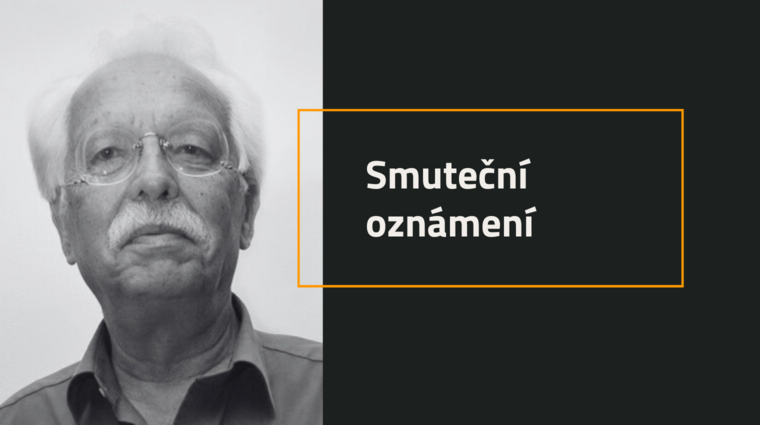
Prof. dr. Detlef Brandes, dr. h. c.
On Tuesday, 2 September, Prof. Dr. Detlef Brandes, Dr. h. c. (1941–2025), a prominent German historian, founding member of the joint Czech-German and Slovak-German Commission and long-time director of the Institute for the History of Germans in Eastern Europe at Heinrich Heine University in Düsseldorf, died in Berlin after a long illness. Together with Prof. Jan Křen, Detlef Brandes was at the forefront of the German Academic Exchange Service's (DAAD) long-term project to support German and Austrian studies at Charles University's Faculty of Social Sciences. This project represented a unique model of long-term, intensive and financially secure cooperation, involving visiting professorships and associate professorships, exchanges of academic staff and students, support for book acquisitions and joint research projects. This programme continues to be successful to this day, and last year we celebrated its 30^(th) anniversary. Detlef Brandes was also involved in creating the inter-university partnership agreement between Prague and Düsseldorf, covering a wide range of fields, particularly in medicine.
Brandes' involvement in this area stemmed from his long-standing interest in the history of Bohemia and Central Europe, particularly the period from 1938 to 1948 when the political landscape of Europe was irrevocably altered and the Czech and German populations in the region diverged. His works on the history of Germans in the Russian Empire are less well known in our country, but were another focus of his research. Thanks to his extensive language skills, including Czech and other Slavic languages, he was well equipped to study these topics. His precise, sober books on this subject, based on a wide range of sources, have become key and indispensable titles.
The extensive monograph Czechs under the German Protectorate: Occupation Policy, Collaboration and Resistance, 1939–1945 (Part 1 published in German in 1969 and Part 2 in 1975), is probably the most widely cited work on the history of the Protectorate of Bohemia and Moravia worldwide. It is notable that almost all of his other books on related topics (e.g. 'Exile in London, 1939–1943: Great Britain and its Allies: Czechoslovakia, Poland and Yugoslavia between Munich and Tehran; The Road to Expulsion: Plans and Decisions on the 'Transfer' of Germans from Czechoslovakia and Poland, Sudeten Germans in the Crisis Year 1938, Germanize and Displace: Nazi Nationality Policy in the Czech Lands) have been translated into Czech. 'Sudeten Germans in the Crisis Year of 1938'; 'Germanize and Displace: Nazi Nationality Policy in the Czech Lands and others were translated into Czech and received high recognition in our country. In 2001, at the suggestion of the Faculty of Social Sciences at Charles University, he was awarded an honorary doctorate by Charles University in Prague. Two years later, the Czech Academy of Sciences awarded him the František Palacký Medal, the highest symbolic award from our leading scientific institution in the field of historical sciences.
Even after his retirement, Detlef Brandes remained in close and friendly contact with his students, doctoral candidates and assistants for as long as his health permitted. Many of these individuals have successfully established themselves in the German academic sphere, particularly in the field of Eastern European history (e.g. Dietmar Neutatz and Volker Zimmermann). Some of them have worked or are still working in the Czech Republic and at our faculty (e.g. Thomas Oellermann, Volker Mohn, Andreas Wiedemann and Thorsten Pomian). The same applies to his senior and junior colleagues from the Department of German and Austrian Studies at the Institute of International Studies at Charles U. The news of his death is still very recent. As sad and irreversible as it is, it will certainly prompt a more detailed assessment of his unique scientific contributions, as well as his deeply human, albeit demanding, approach to those who had the opportunity to work with or discuss ideas with him. This could be at conferences, in their corridors, or even just over a glass of good wine and the inevitable cigarette.
Honour his memory!
Photo: Nakladatelství Prostor